
Winnsboro Historical Museum
100 East Broadway

A town that does not protect its history does not have a future.
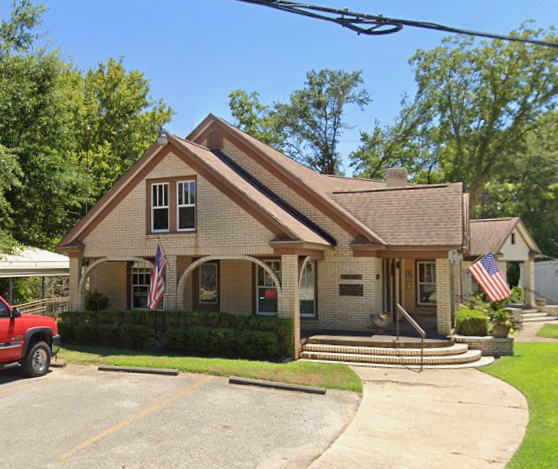
Cassel House
Historic Sign Message
Built in 1937 by cotton ginner, John Cassel, who operated the Cassel Gin from 1927-1951. Cotton was king, the money crop. The Cassel family occupied this traditional structure until 2005, then Clements Realtors acquired the property. It now serves as a real estate office, and as an edifice to Winnsboro’s past and future. “Destroy monuments, destroy the past. A way of life is gone."
Want to take a tour of Winnsboro History? Click the button below.
By clicking this button, you will be taken offsite.
The Legacy of the Cassel Family and the Historic Cassel House
The history of Winnsboro, Texas, is inextricably linked to the era "When Cotton was King," a time when the rhythmic hum of cotton gins defined the local economy and the social fabric of the community. At the heart of this history lies the Cassel family, whose multi-generational involvement in the cotton industry culminated in the construction of one of the town’s most enduring landmarks: the Cassel House.
The Cassel Lineage: From Alabama to East Texas
The family’s Texas story began with John L. Cassel Sr., who was born in Alabama in 1832. He settled in Wood County before 1860, establishing roots in the Stout and East Point vicinity. John Sr. was a pioneer in the local industry, operating a cotton gin near East Point. Following his death in 1899, his son, John Levi Cassel Jr., assumed operations of the family business.
John Jr., born in 1875, was a dedicated cotton farmer and ginner who married Annie Alta Beck in 1907. In the mid-1920s, after the Farmers Cotton Oil Co. acquired assets of a nearby gin, John and Annie relocated to Winnsboro. Here, John Jr. established a significant presence, purchasing land where the modern-day Dairy Queen and "The Junction" are located at the northwest corner of South Main and Coke Rd. His ginning operation at this site spanned over 20 years; despite facing the destruction of two or three gins by fire, he remained resilient, rebuilding each time to continue his work.
The Construction of the Cassel House
In April 1937, John Cassel Jr. purchased land across the street from his gin, at the intersection of South Main and Bexley Streets, from T.C. Cobb. He commissioned Winnsboro’s premier builder, Will Wilson, to construct a residence that would reflect the family's success.
The resulting structure, known as the Cassel House, was built using light brick and was immediately recognized as one of the town’s most impressive and fashionable structures. While John managed the gin, Annie Cassel transformed the property into a botanical haven, raising flowers in a backyard greenhouse for elaborate arrangements. The home at 701 S. Main became a symbol of the "money crop" era, with Annie often recalling the sounds of squeaky, cotton-laden wagons traveling the unpaved roads toward the Cassel Gin at night.
Life in the "Cotton King" Era
During the 1920s and 30s, the Cassels lived through the peak of the row-crop era. Most local farms were 50–60 acres, as a farmer with a horse or mule could typically only cultivate about 35 acres. It was a grueling way of life where farmers worked from daylight to dark in hopes of a good yield.
24-Hour Operations: During peak season, gins like the Cassels' operated 24 hours a day.
Yields: In good years, the sandy East Texas land produced nearly a bale per acre, though it was often much less.
Industry Shift: By the early 1950s, cotton's dominance began to wane. John Jr. retired in the early 1950s and passed away in 1953.
The Next Generation and Modern Preservation
The Cassels had three children: Mildred Sunshine, John Eldon, and Lanelle. The eldest, Mildred Sunshine Hennessey, left a distinct mark on the family legacy. A graduate of the prestigious Juilliard School of Music in New York City, she returned to the family home in the 1970s. She spent the remainder of her life teaching piano and voice within the walls of the Cassel House until she passed away in 2002 at the age of 94.
Though the original Cassel family members have passed, their home remains a cornerstone of Winnsboro’s architectural history. In 2005, Clements Realtors acquired the property and undertook an extensive restoration to return the landmark to its 1937 grandeur. Today, it serves as their business office, preserved as a tribute to the era when cotton was king and the Cassel family helped build the foundation of the community.